
The Microdose.me study has concluded. Over 23,000 participants from 84 countries contributed to the world's largest mobile microdosing study. Our findings have been published in Nature Scientific Reports and Psychopharmacology, with new papers continuing to be published from the data collected. Thank you to everyone who participated.
Published in
Participants explored how microdosing affected various aspects of their health and well-being over time.
All data collection was self-administered and participant identities remained anonymous throughout the study.
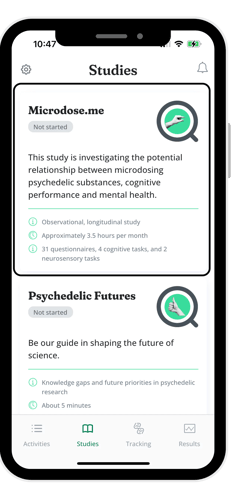
The study required approximately 3 hours over a 3-month period, conducted entirely within the Quantified Citizen mobile app.
The study included both those who were microdosing and those who were not, enabling comparative analysis.

Principal Investigator, Professor, UBC Dept of Psychology

Co-Investigator, Psychedelic Researcher, Medical Doctor
Co-Investigator, PhD Student, Clinical Psychology, UBC

Director of Research, Fungi Perfecti
Co-Founder and CEO, Quantified Citizen

Co-Founder and CTO, Quantified Citizen
After downloading the Quantified Citizen app, participants completed an intake questionnaire, including basic demographic information, basic medical history, and self-reported use of psychedelics. They then completed a baseline battery of self-administered cognitive performance and mental health assessments via the app. This intake process took approximately 30 minutes.
Regardless of whether they were microdosing or not, participants went about their normal daily routines for up to 3 months, completing brief daily questionnaires that took about 1 minute each day. Participants repeated the battery of cognitive performance and mental health assessments on a monthly basis, taking approximately 20 minutes each time.
Finally, at the end of 3 months, participants completed a short closing survey. Participation required approximately 3 hours over the 3-month study period. Participants were NOT provided with psychedelic substances, or with instructions on where to obtain them or how to use them, as part of this study.
Our 3rd manuscript, "Daily self-assessment within a regimen of microdosing indicates enhanced psychological functioning on microdosing days relative to non-microdosing days" published in Psychopharmacology, 2025. The study examined 1,435 adults and found significantly higher ratings on microdosing days across wellbeing, productivity, creativity, connectedness, contemplation, and focus.
Read the Paper →Read our 2nd manuscript, "Psilocybin microdosers demonstrate greater observed improvements in mood and mental health at one month relative to non-microdosing controls" published on Nature Scientific Reports June 30th, 2022.
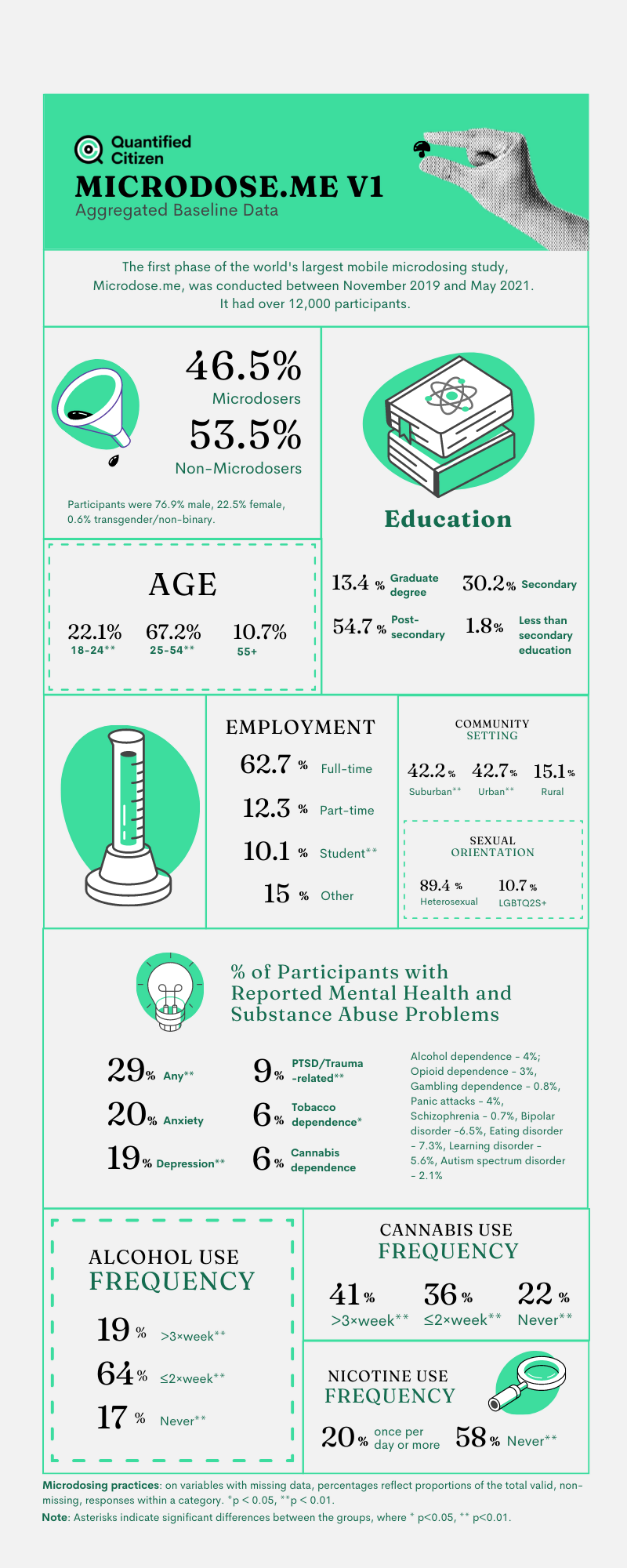
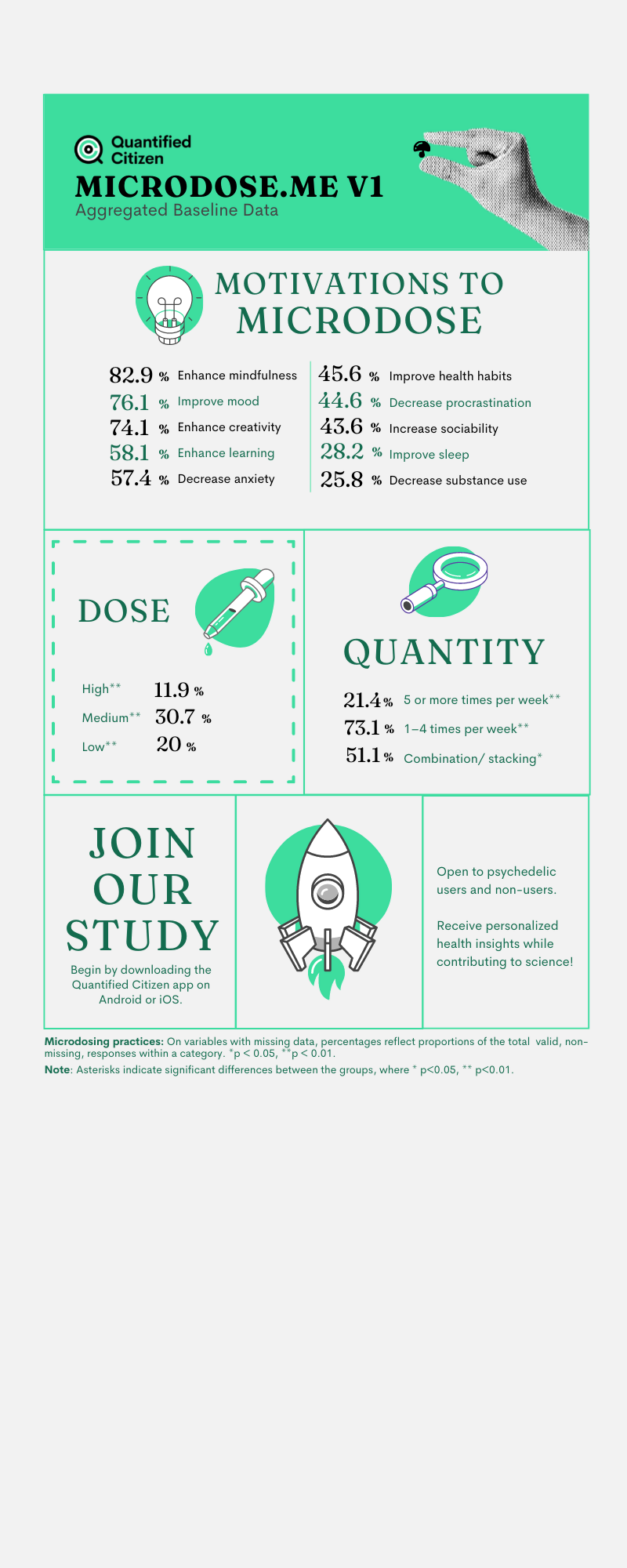
Read the Paper →Our first manuscript, "Adults who microdose psychedelics report health related motivations and lower levels of anxiety and depression compared to non-microdosers" was the 3rd most downloaded paper on Nature Scientific Reports in 2021.
Read the Paper →